

Blog
Final Countdown to FIFA World Cup 2026: Is Your Mobility Program Ready?

The 2026 FIFA World Cup is almost upon us, and the world is getting ready. From June 10 to July 19, millions of fans will flood 16 host cities across the United States, Canada, and Mexico for one of the largest sporting events in history. But beyond the excitement on the pitch, the tournament is expected to impact global mobility programs, business travel, housing availability, transportation, and relocation logistics.
For organisations relocating talent during this time, preparation will be critical. The following are a few of the latest updates and key developments as of May 21, 2026, and you can also view our full FIFA World Cup 2026 Mobility Impact Guide to help mobility leaders anticipate challenges, minimise disruption, and better support relocating employees throughout the tournament period.
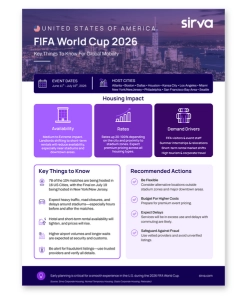 | USASome airports are likely to experience significant congestion, including Los Angeles International, John F. Kennedy International Airport, O'Hare Airport, and Miami International Airport. Be sure to build extra connection time into all itineraries. |
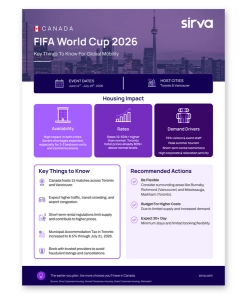 | CanadaToronto Pearson International Airport is likely to experience significant congestion. Be sure to build extra connection time into all itineraries. |
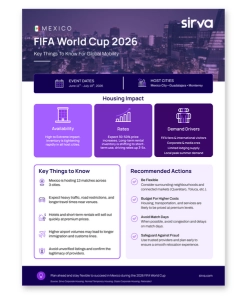
The 2026 FIFA World Cup, being held from June 10 to July 19 in cities across the United States, Canada, and Mexico, will be one of the largest global sporting events ever hosted. With matches across 16 cities and millions of visitors expected, the tournament will create significant impacts for global mobility programs.
For organisations relocating talent during this period, proactive planning is essential. Read Sirva's paper developed with our supplier partners, FIFA World Cup 2026–Mobility Impact, for more details on what you need to know to support your relocation program and your relocating employees.
Elements that May Cause Mobility Disruption
The World Cup will coincide with the peak summer relocation season, amplifying demand for housing, transportation, and local services. Across all host countries, mobility teams should anticipate:
- Reduced housing availability as inventory shifts to short-term rentals
- Significant cost increases across hotels, corporate housing, and rentals
- Extended timelines for home finding and settling-in services
- Increased congestion impacting commute times and service delivery
Housing Challenges Intense in Certain Locations
Demand will not be consistent across all cities; it will spike around key matches and major cities. High-profile games and later-stage rounds will drive short, intense surges in accommodation demand, while cities hosting multiple matches may experience prolonged pressure.
Corporate housing will be particularly impacted by long-stay demand from media, production crews, and event personnel, especially in cities like Dallas, further tightening supply for relocating employees.
Regional Insights Are Important
While all three countries will feel the impact, conditions vary:
- Canada: Vancouver and Toronto face constrained supply and strict booking requirements, with notable rate increases during peak periods.
- Mexico: Limited inventory and regulatory constraints are driving sharp price increases and reduced flexibility, particularly in Mexico City, Monterrey, and Guadalajara.
- United States: Widespread availability challenges across host cities, with some markets expecting extreme shortages and rate spikes exceeding typical seasonal trends.
Mobility Strategies for Success
To navigate disruption while maintaining employee experience, organisations should:
 | Plan early: Secure housing and services months in advance |
 | Build flexibility: Expand location options and allow buffer time |
 | Set expectations: Prepare assignees for higher costs and limited choice |
 | Mitigate risk: Use vetted providers to avoid fraud in high-demand markets |
 | Rethink timing: Where possible, avoid non-essential relocations during peak event windows |
Turning Insight into ActionEvents of this scale highlight the importance of a strategic, data-driven mobility approach. With the right planning and partner support, organisations can mitigate disruption while continuing to deliver a seamless relocation experience. For a deeper dive into city-level impacts, housing trends, and actionable recommendations, download our full white paper on the FIFA World Cup 2026 mobility landscape. If you would like further information on how Sirva can support you and your relocating employees during the busy World Cup time, please contact your Sirva representative or email us at concierge@sirva.com. |
Smart. Helpful. Human. Responsible.